
Italian Marble in Jaipur: A Timeless Choice for Luxury Interiors :
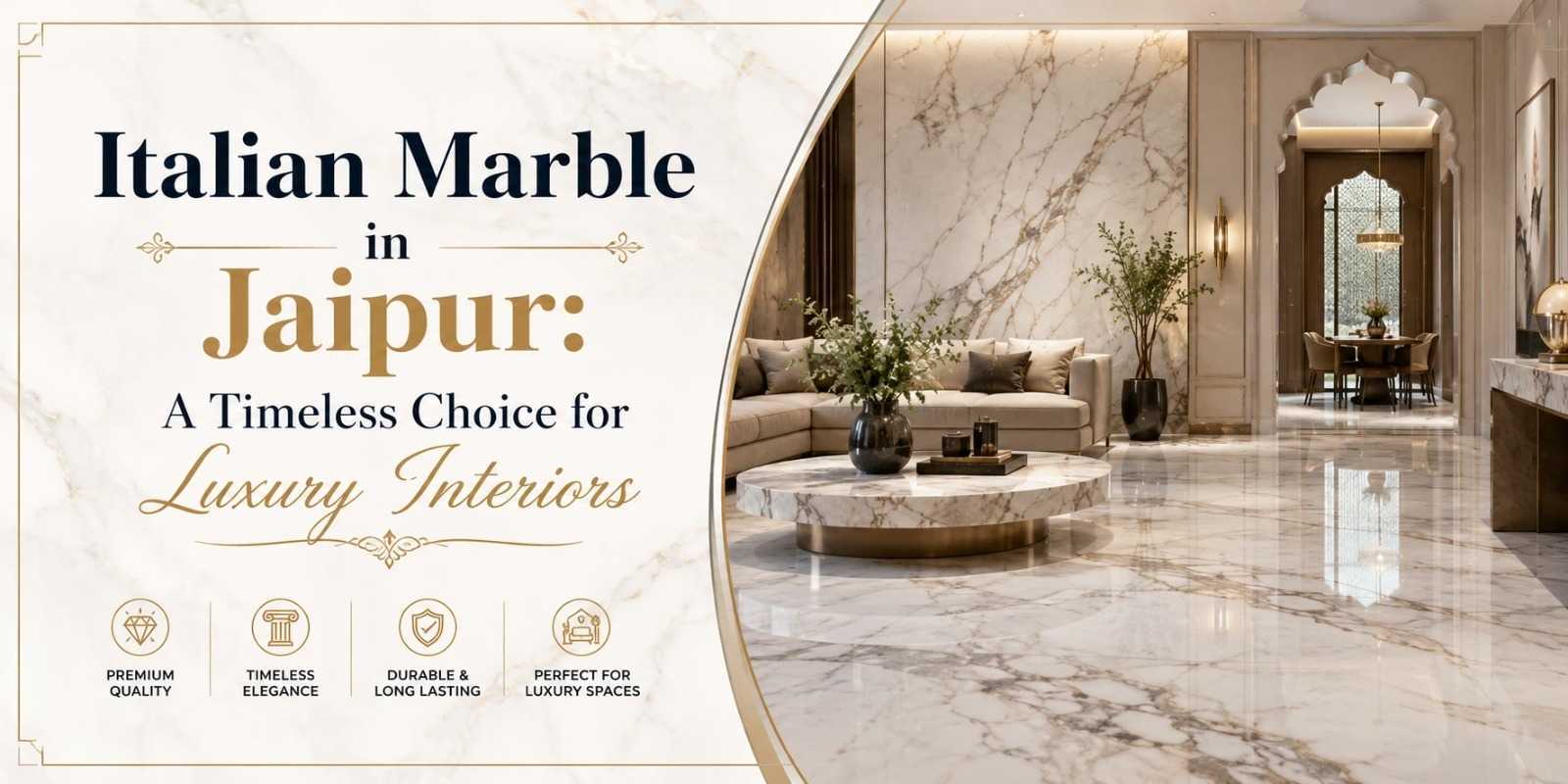
Walk into any high-end villa, hotel lobby, or heritage-inspired home in Jaipur, and there's a good chance you'll find Italian marble somewhere underfoot or along a feature wall. It's been the material of choice for architects and designers for centuries, and that reputation hasn't faded — if anything, it's grown stronger as Jaipur's residential and commercial spaces lean further into premium, timeless design. In this guide, we break down what actually makes Italian marble worth the investment, and what to keep in mind if you're planning to source it for your own project.
What Makes Italian Marble Different
Not all marble is created equal, and Italian marble has earned its reputation the hard way — through centuries of consistent quality. Varieties like Carrara, with its soft grey-white base and d
What sets these apart isn't just the colour palette — it's the consistency of veining and the fine grain structure, a result of the specific mineral composition found in Italy's quarries. Each slab is genuinely one-of-a-kind, which is part of why no two Italian marble installations ever look quite the same.
The Craftsmanship Behind Every Slab
Italy's marble industry isn't something that developed overnight. Quarrying techniques and finishing processes have been refined over generations, and that expertise shows in the final product — from how a slab is cut to how its surface is polished. At Pahariya Stones, we work directly with trusted sourcing partners to make sure the slabs that reach Jaipur carry that same level of finish, rather than settling for inconsistent batches that can happen with lower-grade sourcing.
Built to Last: Durability That Justifies the Investment
A common misconception is that marble is delicate. In reality, Italian marble is a dense, metamorphic stone that holds up well in high-traffic areas when properly sealed and maintained. Over time, it develops a subtle patina — a natural softening of sheen that many designers actually consider part of its charm rather than a flaw. For flooring, countertops, or wall cladding that's meant to last decades rather than years, that longevity is exactly what justifies the higher upfront cost compared to engineered alternatives.
Where It Works Best in Jaipur Homes
Jaipur's design sensibility often blends traditional Rajasthani architecture with contemporary interiors, and Italian marble adapts well to both. In flooring, it brings a cool, reflective quality that suits the city's climate. As countertops in kitchens and bathrooms, it adds a polished, high-end finish. It's also increasingly used on accent walls, staircases, and even building facades in premium residential projects and boutique hotels across the city — anywhere a space needs to feel elevated without looking overdesigned.
A Mark of Prestige
There's also a signalling element to choosing Italian marble that's hard to ignore. It's been associated with luxury for so long that specifying it in a project — residential or commercial — communicates a certain standard before a client or guest even asks about the finishes. For architects working on premium builds in Jaipur, it remains one of the more reliable ways to make that statement.
Buying Italian Marble in Jaipur: What to Check
If you're sourcing Italian marble for a project, a few things are worth confirming before you commit to a slab:
- Thickness and finish – Standard slabs typically run 18-20mm; confirm this matches your application (flooring vs. countertops need different specs).
- Batch consistency – Ask to see the full lot, not just a sample corner, since veining can vary significantly across a single block.
- Sealing requirements – Italian marble is porous and needs periodic sealing, especially in kitchen and bathroom applications.
- Verified sourcing – Work with a supplier who can confirm the marble's origin, rather than a generic "imported" label.
At Pahariya Stones, we help clients walk through each of these before finalising a slab, so there are no surprises once installation begins.
FAQs
Is Italian marble suitable for Jaipur's climate?
Yes. Its dense structure and cool surface make it a practical choice for flooring in warmer climates, provided it's properly sealed.
How is Italian marble different from Indian marble?
Italian marble generally offers finer veining consistency and a distinct mineral composition, while Indian marble is often more budget-friendly and available in a wider range of local variants.
Does Italian marble require special maintenance?
It needs periodic resealing and pH-neutral cleaning products, but with basic care, it holds up well for decades.
Where can I see Italian marble slabs in person in Jaipur?
You can visit the Pahariya Stones showroom in Mansarovar to view available slabs and discuss your project requirements directly with our team.
Final Thoughts
Italian marble isn't just a material choice — it's a long-term investment in how a space feels and functions. From its distinctive veining to its proven durability, it continues to be the benchmark against which other natural stones are measured. If you're planning a project in Jaipur and want to explore genuine Italian marble options, get in touch with our team for a look at current slabs and pricing.